How to organize your plants by type and size to decorate better
Announcement
Keeping plants at home is not just a style issue, it also requires good organization for them to grow well and grow healthily. Knowing how to group them by type and size is key to mastering the space, maintaining visual harmony and facilitating care. In this article we teach you how to organize your plants in an intelligent and aesthetic shape, combining functionality with design.
This is why it is important to organize the plants well
Una buena organización:
Improves the aesthetics of the environment.
Facilitates access to gifts or gifts.
Avoid having some plants block the light of others.
Reduce sore throats by allowing ventilation.
It's not just a question of placing the pieces where they come from, but rather of creating a thoughtful composition, with feeling and balance.
Classify your plants by type
Grouping the plants for their characteristics facilitates their care and highlights their beauty.
Plantas de sol vs. shade plants
Plantas de sol (such as cactus, succulents, lavender): located near windows or balconies.
Plantas de sombra (such as helechos, calatheas, zamioculcas): perfect for more obscure rincones.
Separating them helps keep them in proper condition without one being damaged by the other.
Plants with similar needs
Group plants that are frequently needed (tropical).
Keep aside those that require little water (succulents, cacti).
This avoids excesses or spills of water when running in a group.
Plantas ornamentales vs. edibles
Ornamental plants should be in the most visible spaces of the house.
Edible herbs (albahaca, mint, romero) can be grouped in the kitchen or in the kitchen, where they can be taken and used frequently.
Organizing by function also improves the usability of the home.
Organiza por tamaño y altura
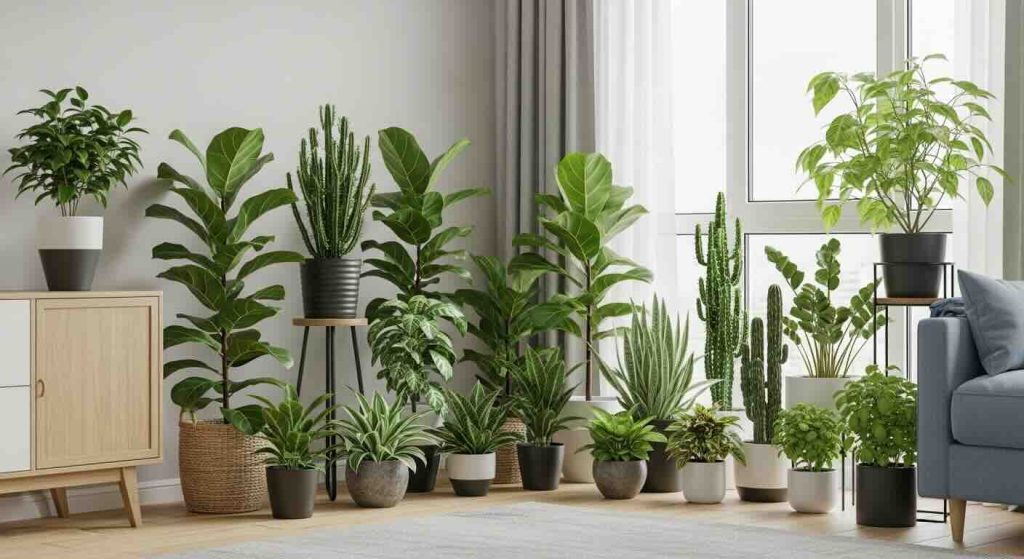
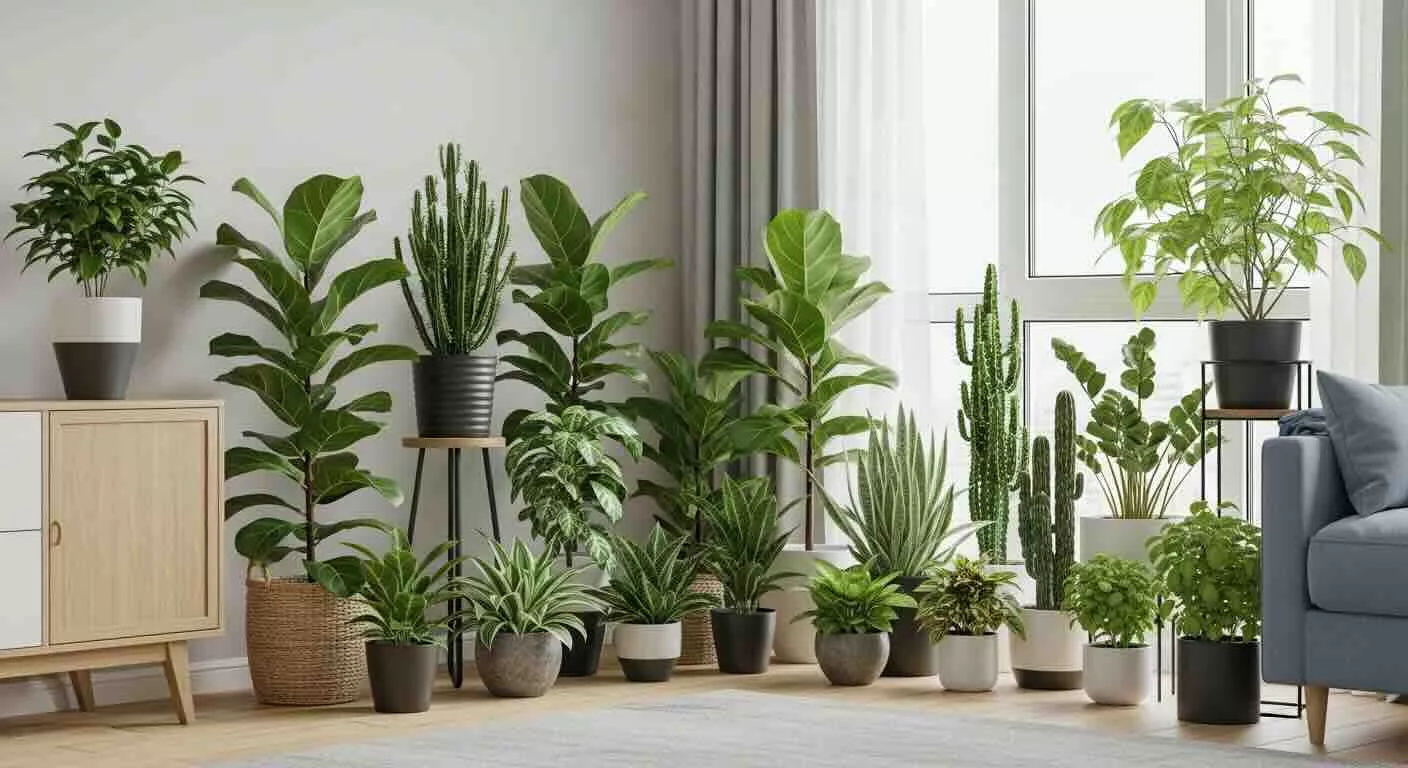
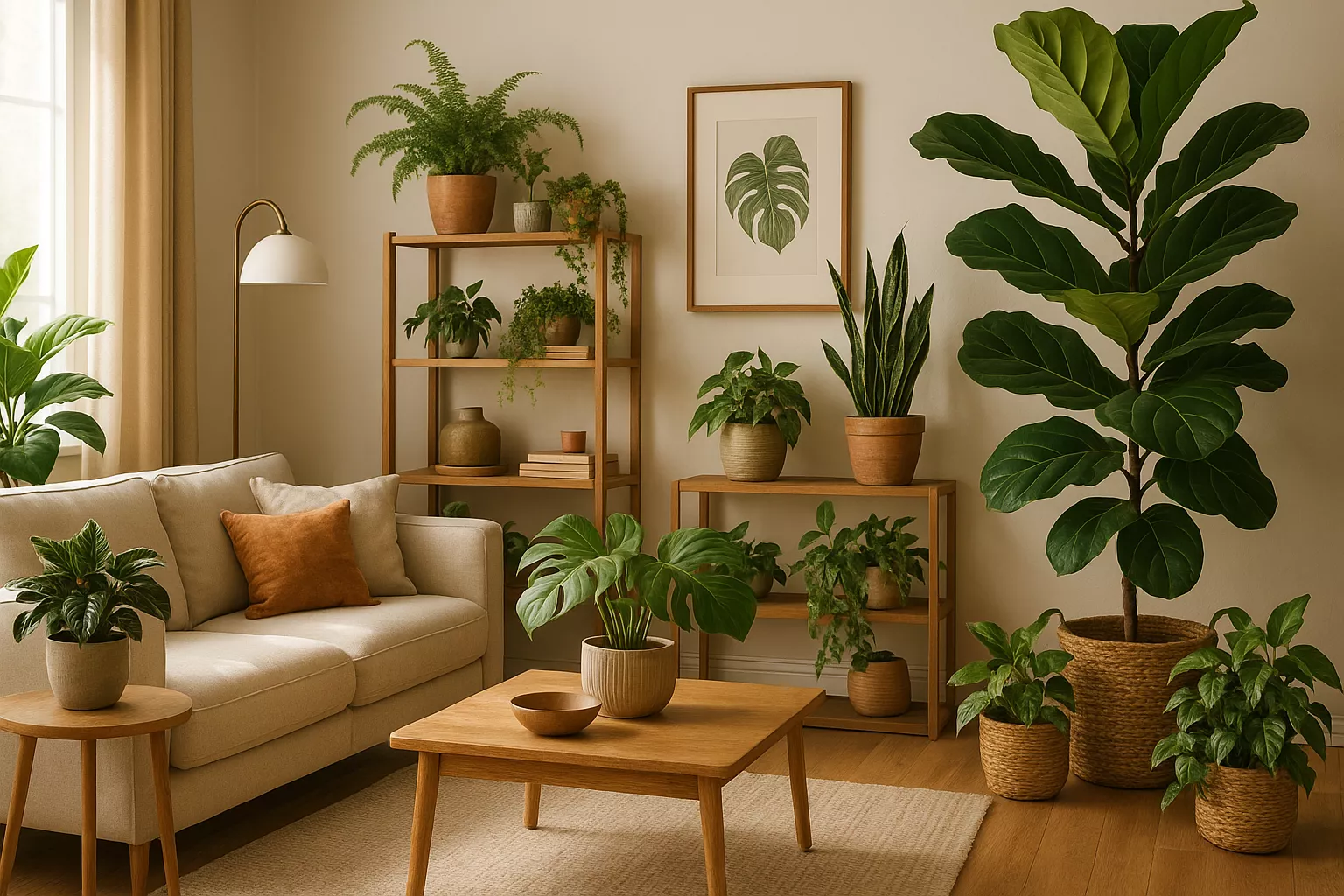
This is one of the most visual criteria for distributing plants. Create harmony by playing with the hills.
Large plants
Place them directly on the floor, in the corners or next to the lower muebles.
Perfect for auxiliary tables, also repisas or lower cabinets.
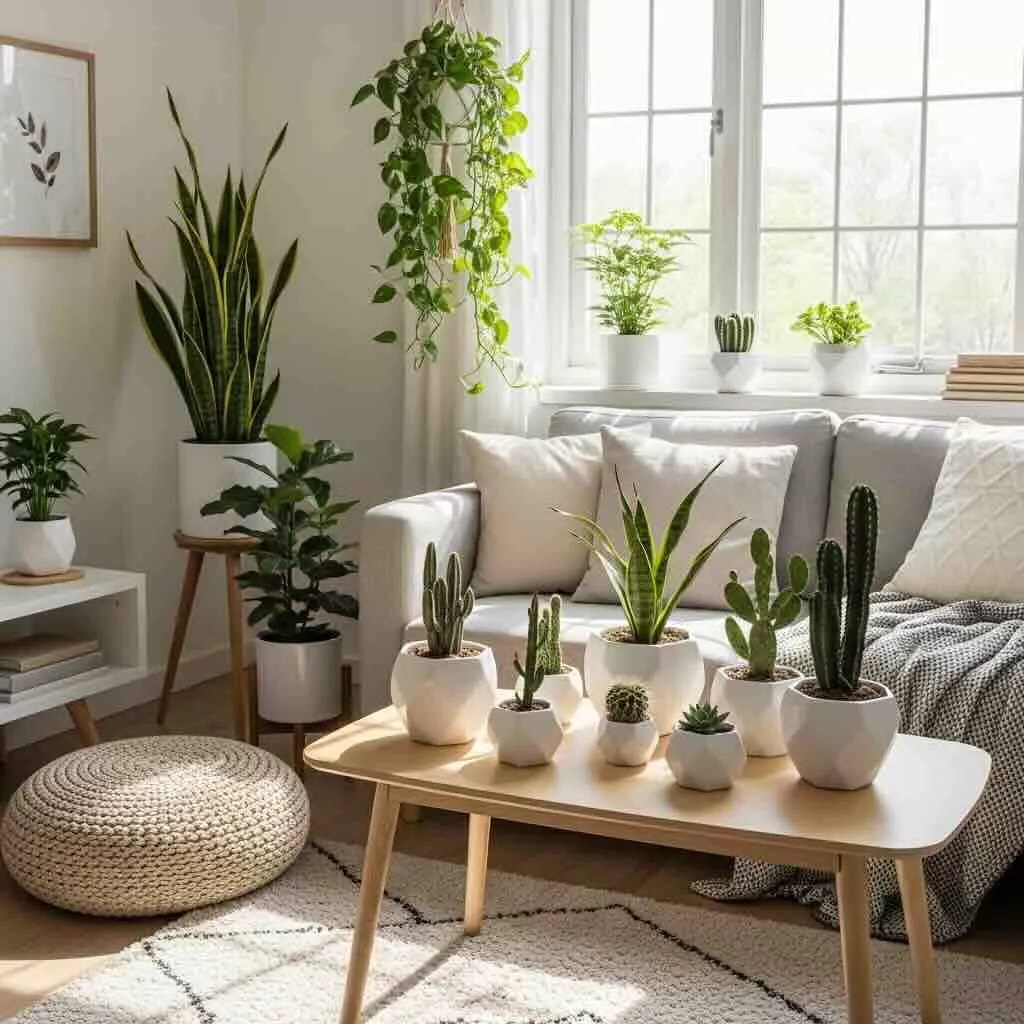
Examples: sansevieria, drácena, anthurium.
Plantas pequeñas
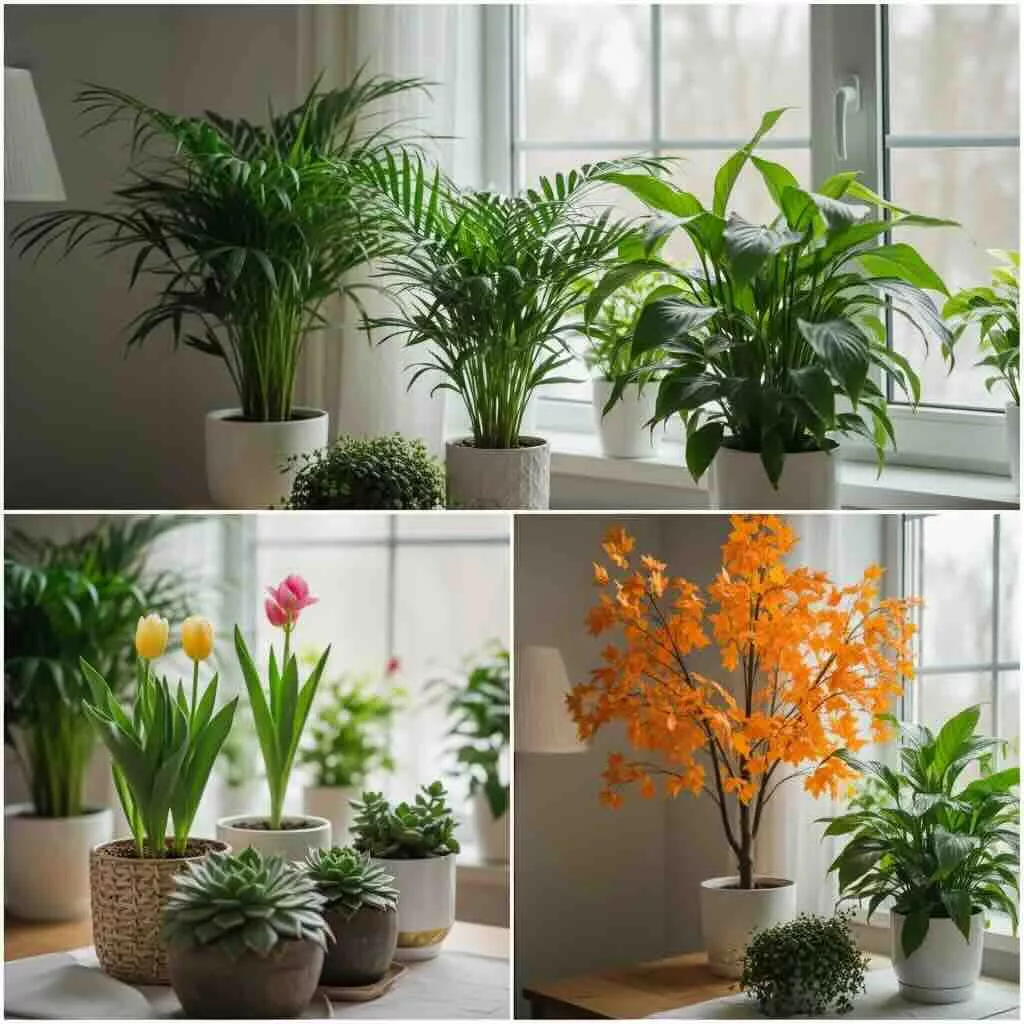
Ideal for desks, desks, windows or decorative displays.
Examples: cacti, succulents, small herbs.
Plantas colgantes
Salads at high heights, repisas floating or colgadas de el techo.
Examples: potos, hiedra, cadena de corazones.
When distributing them like this, avoid that the highest ones block the light of the lowest ones and generate visual depth.
Crea zonas temáticas en casa
You can organize your plants by creating specific zones according to the environment and style:
Tropical Rincon: with large, high-hued plants.
Desert area: with cacti, succulents and decorative stones.
Kitchen Garden: with aromatic herbs organized in small macetas.
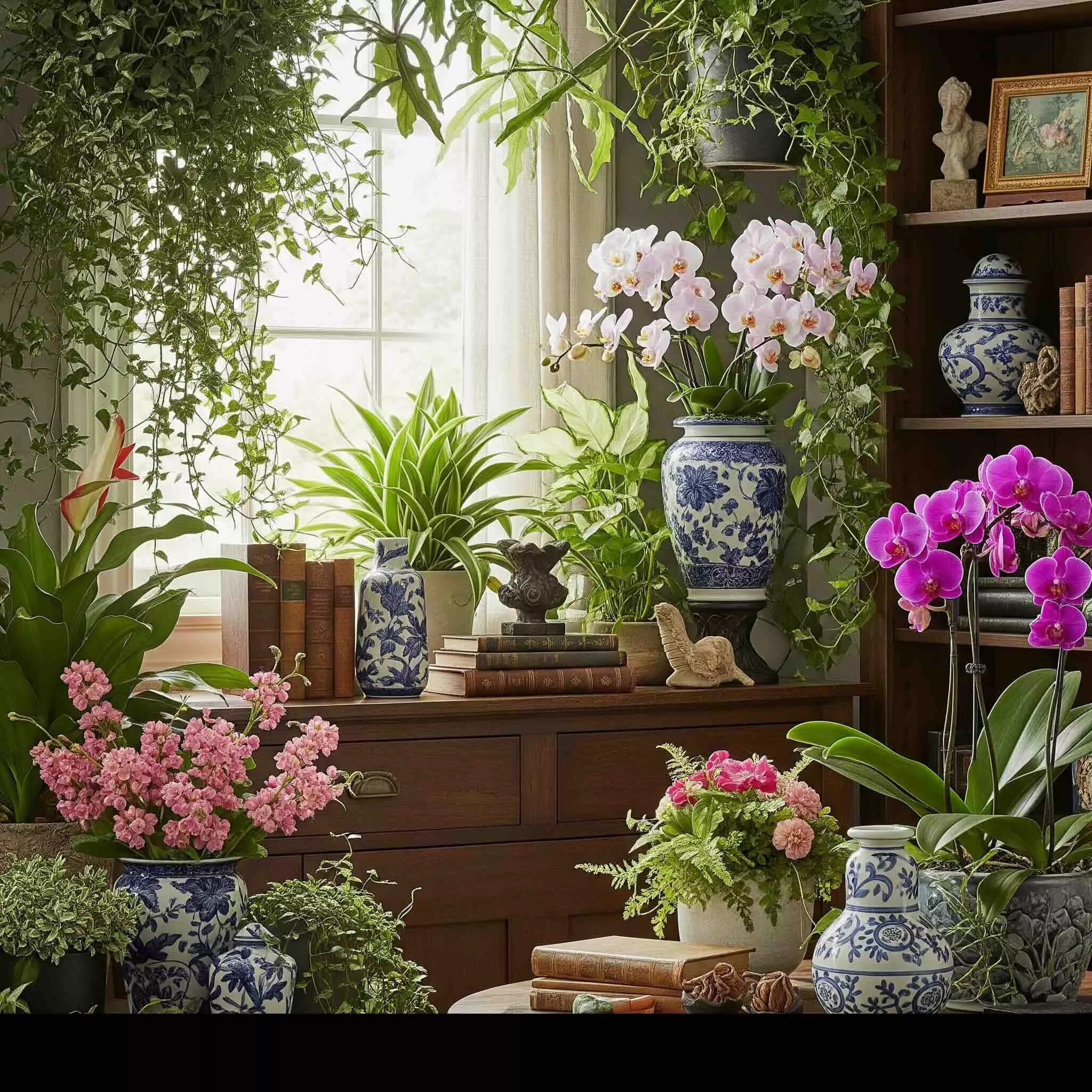
Estantería botánica: mix of materials and types, with books or natural decorations.
These areas bring identity and dynamism to your decoration.
How to organize plants in small spaces
Even if you don't have much space, you can group them in an strategic way.
Estanterías verticales: Maximize the use of the available space.
Soportes escalonados: allows you to locate plants of different sizes in various levels.
Macetas cologantes: they free up space in the soil and bring movement.
Maceteros con ruedas: Make it easier to rearrange or move the plants following the station.
Smart organization compensates for the lack of square meters.
Tips to maintain visual harmony
It doesn't just matter how you care for the plants, but how they come together:
Use macetas of the same style or color para crear unidad visual.
Alternate textures and shapes of hair, but keep a coherent palette of greenery.
Play with simmetry or the controlled outcome, follow your style.
Avoid saturating: There is space for the plants to “breathe” and light up.
Less can be more when it comes to decorating with plants.
Combine organization with functionality
In addition to aesthetics, organize your plants to make it easier for you to care:
Place the most demanding plants in areas that you can observe in a journal.
Group for frequent maintenance to establish simple routines.
Use labels or markers for many and similar species.
A practical system reduces forgetfulness and improves the experience of caring for your plants.
Evita estos errores comunes
Plantas muy juntas que compiten por luz y aire.
Distribución solo estética, without considering real necessities.
Macetas sin drenaje, the one who can pick up the roots.
Alturas mal combinadas, which makes one tapen another.
Observing how your plants behave is the best guide to organizing and adjusting.
Create a green, tidy and stylish environment
Organize your plants by type and so don't just decorate your home, until it improves your health and prolongs your life. With a little planning, you can create a harmonious, practical and peaceful life environment. Whether you have a few macetas or a whole collection, applying these principles will make your green space shine like never before.